June 22, 2026
Tracy’s Story: Living With Cancer Is Not the Same as Dying From It
When Tracy’s breast cancer spread to her bones in December 2022, the diagnosis ...
Read more
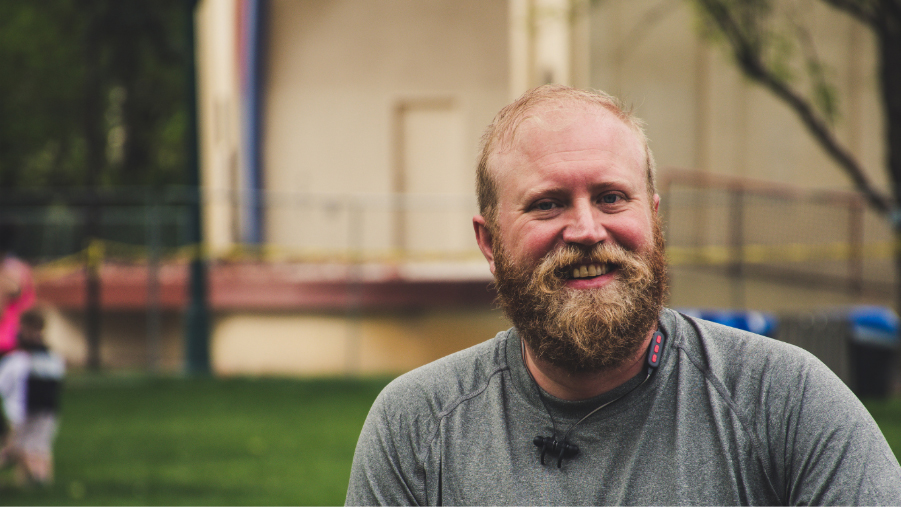
Victor still remembers how quickly everything changed.
On the Sunday before his diagnosis, he completed a cross-country run. The following day he was at the gym. By Tuesday, he was sitting in hospital being told he had acute myeloid leukaemia (AML).
“The Sunday before I’d done a cross-country run. The Monday I was out to the gym. Tuesday I was in hospital. No one could believe it. Neither could I.”
At first, he assumed his shortness of breath was related to asthma and the back-burning that had been happening in the area. Cancer wasn’t even on his radar. The diagnosis arrived suddenly and completely unexpectedly.
Like many people, one of the first things Victor did was send a message to his family.
The text was simple. He told them he was in hospital, that he had AML, and that he would be there for some time. What came back over the following days and months was something he still finds difficult to describe.
Messages poured in. Cards arrived. Letters appeared in the mail. Friends, family and colleagues found their own ways of reaching out and staying connected. Victor kept every card and letter. Years later, they remain carefully stored in a box as a reminder of how many people walked alongside him during treatment.
Throughout his illness, one of the things that mattered most was maintaining a sense of connection with the life that existed outside the hospital walls.
COVID restrictions meant visitors were often limited, particularly during his stem cell transplant treatment in 2021. Rather than allowing isolation to take hold, people adapted. His social club organised regular Zoom coffee catchups. His gym sent him stretch bands, weights and encouraging messages so he could continue feeling connected to the community that had been such a big part of his life before cancer.
Even the smallest interactions carried meaning.
“I could hear the phone do a little ping. I knew someone was thinking about me. I’d send back a heart or a thumbs up. That constant communication, it meant I was supported, all the time.”
The messages rarely needed to be long. Often there wasn’t much to say. What mattered was knowing that people hadn’t forgotten him.
One of the most powerful decisions Victor made during treatment came after he was admitted to the transplant ward. He asked his children to bring photographs. Not photographs taken during treatment. Not photographs of him in hospital. Photographs of the life he had lived before cancer arrived.
There were pictures of him running, teaching, exercising and spending time with family. They showed him healthy, active and engaged in the world. He pinned them to the wall behind his hospital bed where every doctor, nurse and visitor would see them when they entered the room.
For Victor, the photographs served an important purpose. He wanted people to see more than a patient. He wanted them to see a teacher, a runner, a father and a person whose life extended far beyond a diagnosis.
The photographs were equally important for him. During long periods of treatment, when illness can begin to dominate every conversation and every thought, they reminded him who he was beyond cancer.
That same desire to remain actively involved in his care shaped the way he approached conversations with his medical team. During consultations, he would often move his chair closer to the specialist’s desk so he could see the computer screen, follow the discussion and understand what was happening.
“I wanted to be part of the team curing me.”
Victor spent time at both Gold Coast University Hospital and the Royal Brisbane Hospital during his treatment, with accommodation provided through the Leukaemia Foundation. He speaks warmly about the support he received, particularly from the Leukaemia Foundation staff who visited him early in his hospital stay.
On only his second day in hospital, they arrived with information, practical resources and educational materials that helped him and his family understand what lay ahead.
Victor shared the booklets with family members so they could learn alongside him. Looking back, he believes that access to good information helped reduce fear and uncertainty for everyone involved.
One friendship, however, stands out above all the others.
A close friend desperately wanted to support him but found every phone conversation overwhelming. Each time she tried to call, she became emotional and struggled to continue.
So she found another way.
Every day for almost a year, she sent him a digital flower.
There was no lengthy message attached. No expectation of a response.
Just a flower.
A different one every day. She never missed a day. Victor saved every single one.
For him, those flowers became a powerful reminder that support does not need to be complicated. People express care in different ways. Sometimes the most meaningful gestures are the ones that quietly arrive, day after day, asking for nothing in return.
What Victor Learned About Support